Application of Tungsten Carbide Milling Cutters in Stainless Steel Machining
Abstract: This paper provides a detailed exploration of the application of tungsten carbide milling cutters in the field of stainless steel machining. It analyzes the characteristics and machining difficulties of stainless steel materials, expounds on the material properties and advantages of tungsten carbide milling cutters, and illustrates their specific application methods, parameter selection, and effects in stainless steel machining through practical machining cases. Finally, it offers a prospect for the development of tungsten carbide milling cutters in the stainless steel machining industry.
Keywords: Tungsten carbide milling cutters; Stainless steel machining; Application
1. Introduction
Stainless steel is widely used in various industries such as aerospace, automotive manufacturing, medical devices, and architectural decoration due to its excellent corrosion resistance, high strength, and aesthetic appearance. However, the machining of stainless steel is challenging and places high demands on cutting tools. Tungsten carbide milling cutters have become one of the commonly used tools in stainless steel machining because of their superior performance.
2. Characteristics and Machining Difficulties of Stainless Steel Materials
2.1 Material Characteristics
Stainless steel contains alloying elements such as chromium and nickel, which form a dense oxide film on the metal surface, providing it with outstanding corrosion resistance. At the same time, stainless steel has high strength and hardness, with some types reaching a hardness of over HRC40 after heat treatment. Additionally, stainless steel exhibits good toughness and is less prone to brittle fracture under stress.
2.2 Machining Difficulties
- High cutting force: Due to the high strength and hardness of stainless steel, a large cutting force is required during machining, which imposes a significant load on the cutting tool and the machine tool.
- High cutting temperature: Stainless steel has poor thermal conductivity, making it difficult for the heat generated during machining to dissipate. This leads to an increase in the temperature in the cutting area, accelerating tool wear and even causing thermal deformation.
- Severe work hardening tendency: During the cutting process, the surface layer of stainless steel undergoes plastic deformation, resulting in a significant increase in hardness and further complicating subsequent cutting operations.
- Prone to tool adhesion: The good toughness of stainless steel causes the chips to easily adhere to the rake face of the cutting tool during cutting, forming built-up edges that affect the surface quality of the machined part and the tool life.
3. Material Properties and Advantages of Tungsten Carbide Milling Cutters
3.1 Material Properties
Tungsten carbide milling cutters are mainly manufactured through powder metallurgy processes using metal powders such as tungsten carbide (WC) and cobalt (Co). Tungsten carbide has extremely high hardness and wear resistance and serves as the main cutting part of the milling cutter. Cobalt acts as a binder, tightly bonding the tungsten carbide particles together and improving the toughness and strength of the tungsten carbide.
3.2 Advantages
- High hardness and wear resistance: The hardness of tungsten carbide milling cutters can reach HRA89 - 92.5, enabling them to withstand the high cutting forces and temperatures during stainless steel machining, effectively resisting tool wear and extending tool life.
- Good toughness: The addition of cobalt gives tungsten carbide milling cutters a certain degree of toughness, making them less prone to chipping when subjected to large cutting impacts and ensuring the continuity and stability of the machining process.
- Excellent chemical stability: Tungsten carbide milling cutters are less likely to react chemically with stainless steel at high temperatures, reducing adhesion and diffusion wear between the tool and the workpiece and contributing to improved surface quality of the machined part.
4. Application Examples of Tungsten Carbide Milling Cutters in Stainless Steel Machining
4.1 Machined Part and Requirements
Take the machining of the stainless steel housing of an aerospace component as an example. The housing requires high dimensional accuracy, with a surface roughness of less than Ra0.8μm, and must be free from defects such as scratches and cracks.
4.2 Milling Cutter Selection
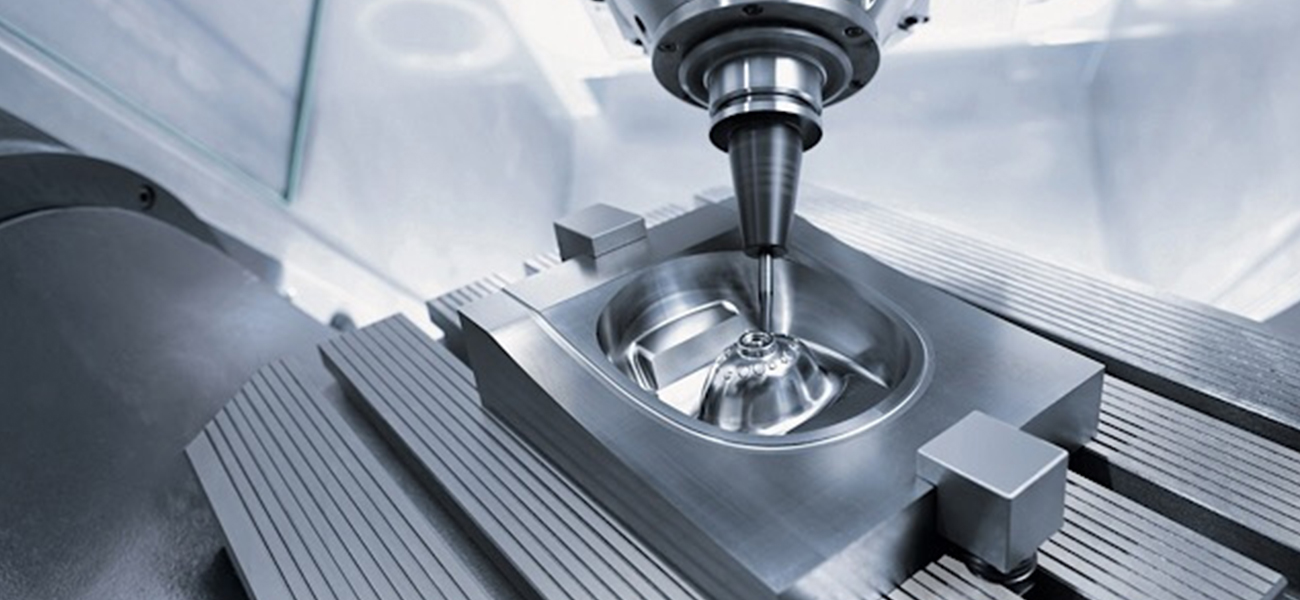
A solid carbide (tungsten carbide) end mill with a diameter of Φ10mm, 3 teeth, and a helix angle of 35° is selected. This type of milling cutter offers high rigidity and cutting stability, suitable for high-speed and efficient machining of stainless steel.
4.3 Machining Parameter Selection
- Spindle speed: Based on the material characteristics of stainless steel and the diameter of the milling cutter, a spindle speed of 800 - 1000r/min is chosen. A higher speed can increase the cutting speed and reduce the machining time, but it also increases the cutting temperature. Therefore, the speed should be reasonably selected while ensuring tool life.
- Feed rate: A feed rate of 200 - 300mm/min is selected. An appropriate feed rate ensures the stability of the cutting process and avoids excessive tool wear or a decline in surface quality due to an过快 (too fast, here it should be "overly fast" in a more natural way, but for simplicity we just use proper expression) or overly slow feed.
- Cutting depth: The cutting depth is generally controlled between 0.5 - 1mm. A smaller cutting depth reduces the cutting force and temperature, minimizing tool wear and the degree of work hardening.
4.4 Machining Effect
By reasonably selecting tungsten carbide milling cutters and machining parameters, the machined stainless steel housing meets the dimensional accuracy requirements, with a surface roughness of Ra0.6μm and good surface quality, free from scratches, cracks, and other defects, satisfying the high-precision machining requirements for aerospace components.
5. Development Prospects of Tungsten Carbide Milling Cutters in the Stainless Steel Machining Industry
With the continuous development of industries such as aerospace and automotive manufacturing, the demands for the quality and efficiency of stainless steel machining are increasing. Tungsten carbide milling cutters will play an even more important role in the stainless steel machining industry due to their excellent performance. In the future, the development trends of tungsten carbide milling cutters mainly include the following aspects:
- Tool material innovation: Research and develop new types of tungsten carbide materials to further improve the hardness, wear resistance, and toughness of tungsten carbide milling cutters and meet the requirements of more challenging stainless steel machining tasks.
- Optimization of tool structure design: Optimize the geometric shape, helix angle, number of teeth, and other structural parameters of tungsten carbide milling cutters to enhance their cutting performance and machining efficiency.
- Application of coating technology: Apply advanced coating technologies such as physical vapor deposition (PVD) or chemical vapor deposition (CVD) coatings to form a layer with special properties on the surface of tungsten carbide milling cutters, further improving their wear resistance, corrosion resistance, and oxidation resistance.
6. Conclusion
Tungsten carbide milling cutters have significant advantages in stainless steel machining due to their high hardness, wear resistance, and good toughness. By reasonably selecting the type and machining parameters of tungsten carbide milling cutters, the difficulties in stainless steel machining can be effectively overcome, improving machining quality and efficiency. With the continuous advancement of technology, the application prospects of tungsten carbide milling cutters in the stainless steel machining industry will be even broader.
End-Effector Solutions for Industrial Robots: A New Driving Force for Intelligent Manufacturing